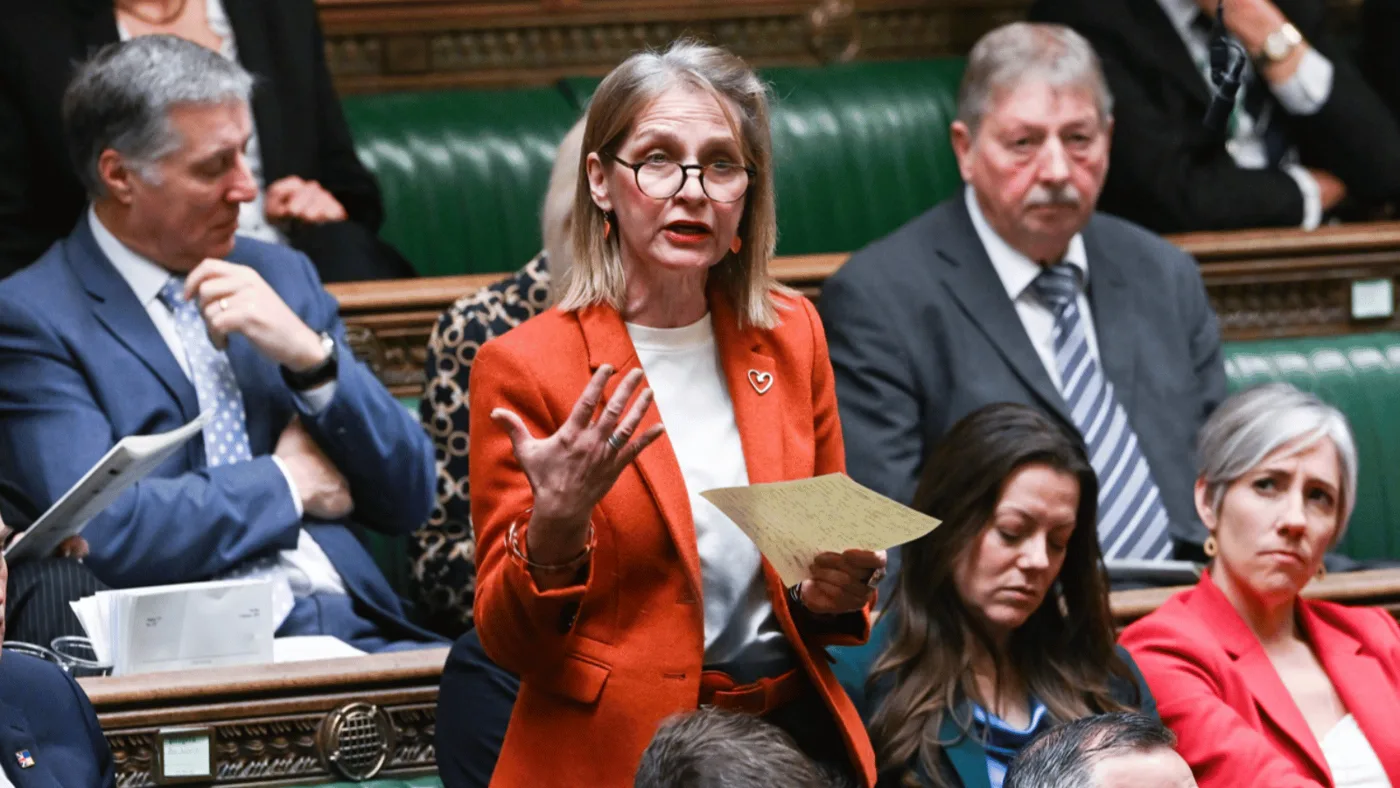

Bath MP Wera Hobhouse has brought in a Bill to make filming people in public without consent an offence. Her campaign wants to hear from people filmed.
Bath’s MP, Wera Hobhouse, has introduced a Bill in Parliament that would make it an offence to film someone in public without their consent and then share the footage to humiliate them or for sexual gratification.
The Liberal Democrat brought the Images (Non-consensual Recording and Distribution) Bill into the House of Commons on Tuesday 17 November. She has been pushing for a change in the law since February, her office said, after a rise in so-called “content creators” secretly filming women in public, often on nights out, and posting the clips online for views and money.
Overview
- What: the Images (Non-consensual Recording and Distribution) Bill, introduced by Wera Hobhouse on 17 November 2026.
- What it would do: create offences covering the non-consensual recording of a person, and the sharing of that footage to get sexual gratification or to cause the person alarm, humiliation or distress.
- What it would not touch: journalism, crime prevention and incidental filming in public.
- If you have been filmed: the Have You Been Filmed campaign has a website and an anonymous survey.
Who is being filmed
According to the MP’s office, women are often filmed from intrusive, sexualised angles without knowing it, and then face waves of misogynistic abuse in the comments under the posts. Some have had their personal details leaked, suffered serious damage to their reputation, and are now afraid to go out.
Mrs Hobhouse says police representatives have told her it is not only women. LGBTQ+ young people, sex workers, rough sleepers and people in a mental health crisis are also being singled out and filmed on purpose.
The release points to a BBC investigation into covert filming, which found this kind of content had been viewed three billion times in three years.
The gap in the law
The MP’s case is that the law has not kept up. Existing voyeurism law does not properly cover someone being deliberately filmed in a public place, her office said, and harassment offences are hard to use when there is no “course of conduct” or no direct contact between the person filming and the person filmed.
Her Bill would cover both the original recording and the later sharing of the footage. It would also take account of the money behind it, as social media platforms reward provocative and inflammatory posts.
Mrs Hobhouse said:
“People should be able to go about their daily lives without worrying that someone is secretly filming them, sexualising them, and turning a vulnerable moment into online content for profit.
“We are seeing a growing trend of people being targeted in public, with footage shared online to generate views, followers and revenue. The people filmed are left to deal with the humiliation and abuse, while those responsible can argue that they are simply recording in a public place.
“The law has not kept pace with this dystopian behaviour. Existing offences do not adequately address the targeted filming of people in public, leaving a gap in protection. This Bill is an important step towards closing that gap and making clear that people should not be able to exploit others in this way without consequence.”
The Bill’s full title sets out its aim: a “Bill to create offences relating to the non-consensual recording of images of a person, and relating to the distribution of any such images with the purpose of obtaining sexual gratification or of causing alarm, humiliation or distress to that person; and for connected purposes.”
Have You Been Filmed?
Alongside the Bill, Mrs Hobhouse has been working with a woman who was filmed in this way to build a wider campaign, called Have You Been Filmed?
Its aim is to put victims’ experiences at the front, connect people who have been targeted, and show how big a problem it is, since much of it goes unreported. The campaign’s website says it is “not seeking to ban public filming, simply to make predatory behaviour an offence”, and that it wants protections for journalism and other legitimate filming.
The website, live now, has information for people affected and a survey, which the campaign says can be filled in anonymously and in as much or as little detail as people like. Anyone who has been filmed in public without their consent is being asked to take part:
- Campaign website: haveyoubeenfilmed.com
- Share your experience: the campaign survey
- Follow the campaign: linktr.ee/have.you.been.filmed
Bath Daily has also reported on Mrs Hobhouse’s speech in the Budget debate.
Source: Office of Wera Hobhouse MP for Bath.
Have your say