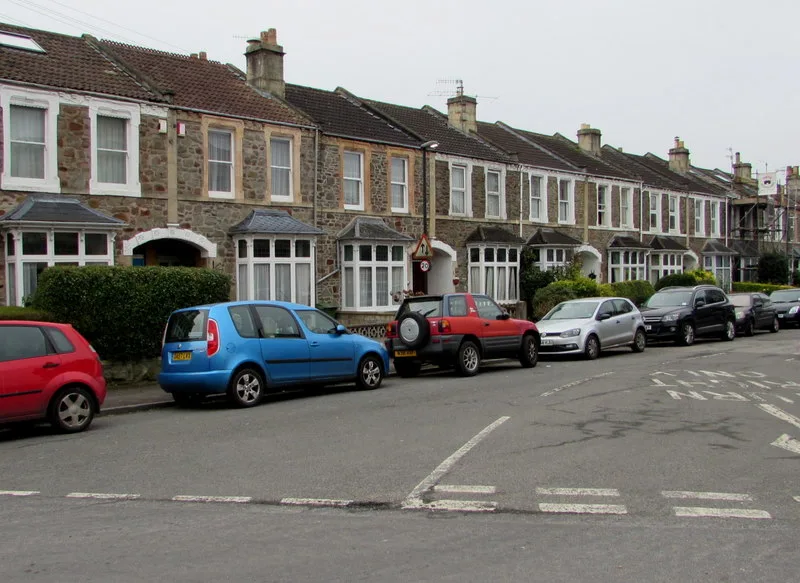

From Monday a residents' permit in Bath costs more if your car is bigger. A Ford Transit pays £112.08 extra, a Smart Fortwo gets £20 off. The eleven bands.
Residents’ parking permits in Bath and North East Somerset will be priced by the size of the vehicle from Monday 25 August, on top of the emissions charge that has applied since 2022. The council confirmed the start date on 20 August, after two rounds of consultation.
The supplement is worked out from a vehicle’s footprint: length multiplied by width, in square metres, with the wing mirrors fully extended. The council publishes eleven bands and a table of worked examples. At the bottom, a Smart Fortwo at 4.2 square metres takes £20 off a first permit. At the top, a Ford Transit 350 at 14.8 square metres pays the capped maximum of £112.08 on a first permit and £308.22 on a second.
Second permits are charged far more steeply than first ones, and get no discount at all. The same Smart Fortwo that earns £20 off a first permit is charged £8.40 on a second. A Nissan Qashqai pays £7.90 on a first permit and £63.20 on a second.
The eleven bands
Bands 1 to 3 cover vehicles up to 7 square metres and carry a discount on a first permit: £20 up to 5 square metres, £10 from 5.01 to 7. From band 4 upwards the charge is the vehicle’s area multiplied by a rising figure, £1 a square metre in band 4, £7 in band 10. Band 11, anything over 14 square metres, is a flat £112.08. Blue Badge holders living in a residents’ parking zone get their permit free and are not affected.
What else changes on Monday
- A valid MOT is required at the point a residents’ permit is bought or renewed.
- Visitor permits rise from £1 to £1.50 a day. A 100-hour digital bundle goes from £10 to £15. This is the first of three annual steps, reaching £2.50 a day in 2028.
- Parking charges arrive on Weston Road, on the stretch between Park Lane and the north east entrance to Royal Victoria Park, which is unrestricted kerb at the moment. The first hour will be free, then the same emissions-based tariff as the Royal Victoria Park spaces.
- A 25-metre stretch of bay on Monmouth Street becomes police-only parking, to support Avon and Somerset Police moving into a new city centre station. Bays on Monmouth Place become Central zone permit holders only.
- Charged hours at Bath Sports and Leisure Centre car park start at 6am, not 8am, so early swimmers stop having to buy an overnight stay.
- The four-hour overnight limit on electric vehicle charging bays at Larkhall Square car park is removed.
Two changes land later. Park and ride 24-hour parking rises from £3 to £4 for drivers who do not use the bus, but not until 1 October; the up-to-three-hours charge stays at £2. And Saturday charging at Bath Hill East car park in Keynsham has been dropped altogether, after residents and businesses said it would hurt footfall.
Why the council says it is doing it
Councillor Joel Hirst is cabinet member for sustainable transport strategy. He put the case on road safety. “Research shows that larger vehicles like SUVs pose a greater risk to pedestrians and cyclists in collisions, with children particularly vulnerable. By introducing size-based permit charges, we are encouraging the use of smaller, safer and cleaner vehicles.”
The council’s own consultation material sets out the reasoning in more detail. It notes that SUVs accounted for more than 60% of new car sales in the UK in 2024, up from under 50% in 2020. Taller bonnets and bigger blind spots, it argues, make collisions worse. It also makes a plainer argument about space: larger parked cars block buses, bin lorries and emergency vehicles on Bath’s narrow streets. The visitor permit increase is justified separately, as covering the administration and enforcement cost of the zones from the people who use them.
What it means for you
If you hold a residents’ permit, the charge lands when you next buy or renew, not on Monday itself. Permits are vehicle-specific and MiPermit calculates the price automatically. Three things are worth knowing before you renew:
- The size charge sits on top of the emissions charge, and diesels already pay 25% more. A large diesel is hit twice.
- If you register more than one vehicle to a permit, you are charged for the most polluting one. Adding a bigger or dirtier car mid-term means cancelling the permit and buying a new one, with no refund.
- Changing the registration on a permit costs £10 in administration.
If the council holds no size data for your vehicle, it says it will accept photographs or documents showing the dimensions. If you provide nothing, it applies the maximum charge.
Around 9,500 permit holders are in the affected zones. The council is consulting separately on new residents’ parking zones for other parts of the city. Our roadworks and travel page covers what is closed in Bath now, and where park and ride still beats driving in.
Sources
- New parking charges and size-based permits set to start, Bath & North East Somerset Council, 20 August 2026, for the 25 August start date, the list of changes and Councillor Hirst’s quote.
- Parking charges 2026-27, Bath & North East Somerset Council, for the eleven charging bands, the worked examples, the visitor permit steps, the Weston Road and Monmouth Street proposals, the park and ride tariff and the car park amendments.
- Apply for a Residents Parking Permit, Bath & North East Somerset Council, for the emissions-based charging basis, the diesel surcharge, the multiple-vehicle rule and the £10 change-of-registration fee.
Have your say