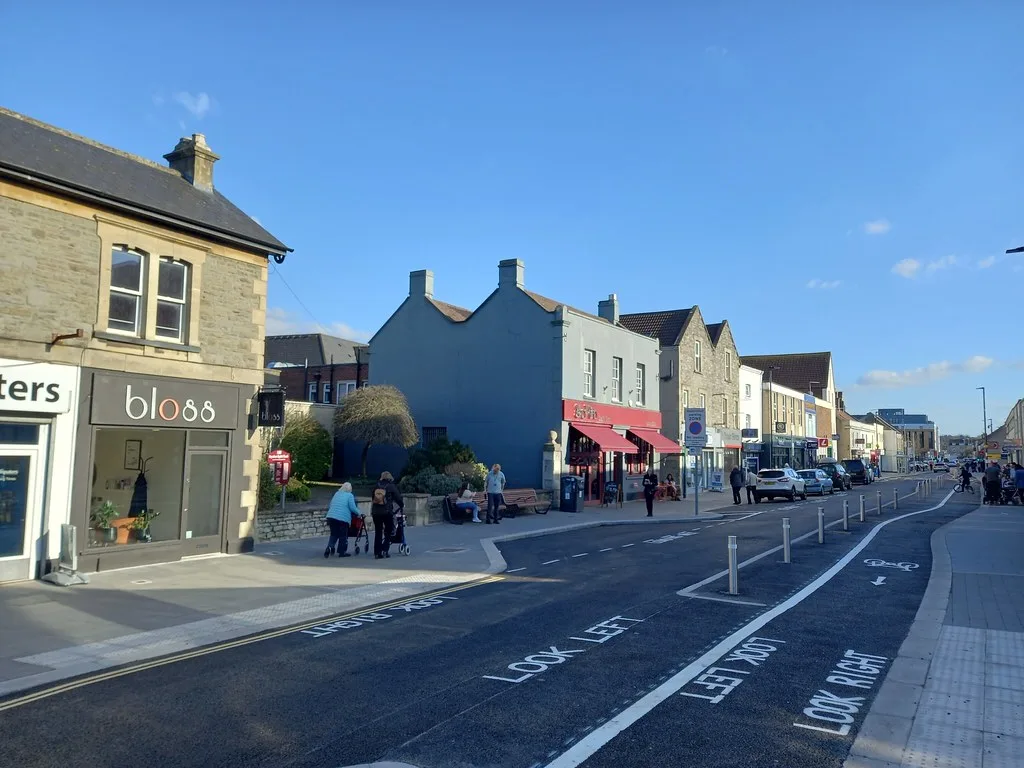

Cameras start enforcing six existing restrictions on 24 August, at four Bath junctions and one in Keynsham. A first offence brings a warning, then a fine of up to £70.
Cameras start enforcing six existing traffic restrictions in Bath and Keynsham from today, Monday 24 August. Bath & North East Somerset Council announced the start date on 21 August.
None of the restrictions is new. All six are already signed on the road, and most have been in place for years. What changes today is who catches you. Enforcing moving traffic restrictions has been a police job, and the council said when it applied for the powers that it is not a core priority for the police. From today an Automatic Number Plate Recognition camera does it instead, and the penalty is a council fine with no licence points.
The council’s own enforcement locations page lists six restrictions across five junctions, all operating 24 hours:
- Brook Road, Bath: commercial vehicle weight restriction, 7.5 tonnes
- Cavendish Road and Sion Hill junction, Bath: no right turn
- George Street and Gay Street junction, Bath: turn left ahead
- George Street and Gay Street junction, Bath: no entry
- High Street, Bath Hill and Temple Street, Keynsham: no right turn
- Newbridge Road and Newbridge Hill, Bath: no left turn
One point worth knowing before you go looking: as of this morning that page still gives the live date for every one of the six as “TBC”. The press release carries the date, the page a driver would actually check does not.
Six months of warnings first
The council will run a six-month warning period at each location. A driver who commits a first contravention at a location gets a warning notice instead of a Penalty Charge Notice. Any contravention after that can bring a PCN.
The council has consistently put the penalty at up to £70. Every recipient has a legal right of appeal.
The warning applies per location, not per driver. Making a first banned turn at Newbridge Road and then a first banned turn at George Street would, on the council’s wording, produce two warning notices rather than a warning and a fine.
How often it actually happens
The council surveyed three of these sites before applying for the powers, and published the daily counts in its 2022 consultation. They are not evenly spread.
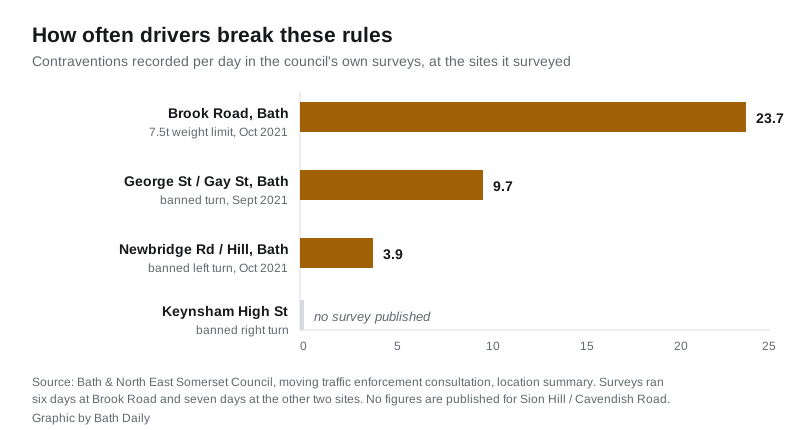
Brook Road is the outlier. Its 7.5 tonne limit exists to protect the railway bridge and to keep large vehicles off a narrow residential street. Over six days in October 2021 the council logged 142 contraventions, an average of about 24 a day, with the two highest counts falling on the Saturday and Sunday.
George Street and Gay Street produced 68 contraventions over seven days in September 2021, about 10 a day. The council describes the right turn onto Gay Street as a dangerous movement that smaller vehicles cannot complete, and says there is no engineering fix available because of the lack of space.
Newbridge Road and Newbridge Hill was the quietest surveyed site: 27 contraventions over seven days, about four a day. The reason for the ban is specific. When eastbound traffic on Newbridge Road gets a green light, the pedestrian crossing on Newbridge Hill goes green at the same time, so a driver making the banned left turn can meet someone already crossing.
Keynsham High Street was never surveyed. The council said in 2022 that it had not carried out a count “due to the recent public realm improvement works”, but wanted to enforce anyway because of the potential for dangerous movements. The junction changed when the High Street became one-way: the old roundabout entrance is now no entry to motor vehicles, and the banned right turn into Temple Street crosses a lane where cyclists emerge from Bath Hill.
Cavendish Road and Sion Hill is the one site with no published survey at all. It was not among the five locations the council consulted on in 2022, which covered four junctions in Bath and one in Keynsham. The council says two of the six restrictions now being enforced are part of its Liveable Neighbourhoods programme, without saying which.
What it means for you
If you drive any of these routes regularly, the practical answer is to check the signs once, this week, rather than find out by post.
- The restrictions have not changed. If you already comply, nothing happens to you.
- A first contravention at a location should bring a warning notice, not a fine, for the next six months.
- If you do get a PCN, you have 28 days from the date it was served to challenge it. A PCN is normally treated as served two working days after it is issued.
- Do not pay while a challenge is outstanding. If the council rejects it, it must write to you within 56 days and tell you how to appeal to the independent Traffic Penalty Tribunal.
- Speeding is not part of this. That remains a police matter.
On the money: PCN income is regulated. The council must first cover the cost of running the enforcement, and any surplus can only go to transport purposes such as road safety, public transport, walking and cycling infrastructure and highway maintenance.
Our Bath roadworks and travel page tracks current closures and disruption across the district, and Bath planning news covers what is being decided on the council’s own record.
Have your say