
The average B&NES home is worth £18,016 less than it was last November, and grew more slowly over the year than any of the five neighbouring councils. Flats fell again.
The average home in Bath and North East Somerset was worth £406,169 in May, £18,016 less than the district’s record set only six months earlier, according to the latest UK House Price Index from HM Land Registry.
Prices here peaked in November 2025 at £424,185, the highest figure the index has ever recorded for this district. Every one of the six months since has come in below it. May’s average is 4.2 per cent under that peak.
The year-on-year number looks calmer, and that is the point. Prices are up 0.9 per cent, or £3,813, on May 2025. But the district also fell 4.0 per cent in the year to May 2025, so a small rise now is measured against a weak month, not a strong one.
Slower than all five neighbours
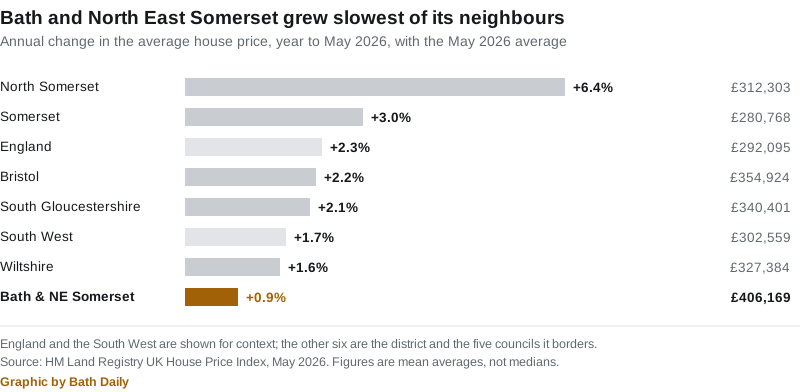
Set the district against the councils it borders and the picture is not one of a market cooling in line with everywhere else. It is the slowest of the group.
- North Somerset: up 6.4 per cent, to £312,303
- Somerset: up 3.0 per cent, to £280,768
- Bristol: up 2.2 per cent, to £354,924
- South Gloucestershire: up 2.1 per cent, to £340,401
- Wiltshire: up 1.6 per cent, to £327,384
- Bath and North East Somerset: up 0.9 per cent, to £406,169
England as a whole rose 2.3 per cent to £292,095 over the same twelve months, and the South West rose 1.7 per cent to £302,559. Bath and North East Somerset came in below both.
None of that makes the district cheap. At £406,169 it remains the most expensive of the six areas by a wide margin, £51,245 above Bristol and £125,401 above Somerset. It is the growth that has stalled, not the price level.
Four years, £1,571
The longer view is the one worth holding on to. In May 2022 the average home here was worth £404,598. Four years later it is £406,169.
That is a rise of £1,571, or 0.4 per cent, across four years in which the cost of nearly everything else moved a great deal more. The index has spent that whole period bouncing between roughly 98 and 105 on a base of 100 set in January 2023, without ever breaking out of it.
Flats are still falling
The type breakdown shows where the drag is coming from, and it is the part of the market that first-time buyers and downsizers actually use.
- Detached: £709,484, up 1.0 per cent
- Semi-detached: £442,669, up 2.3 per cent
- Terraced: £385,395, up 1.8 per cent
- Flats and maisonettes: £238,934, down 2.2 per cent
Flats are the only type to have fallen over the year, by £5,486. They have also gone backwards over the four-year view: the average flat here was worth £251,467 in May 2022, so it is £12,533 lower now than it was then. In a district with as much converted Georgian and purpose-built flatted stock as this one, that gap matters.
The index puts the average first-time buyer purchase in Bath and North East Somerset at £330,912. The equivalent figure for England is £244,288, so a first home here costs £86,624 more than the national average for a first home.
What it means for you
These are mean averages, not medians. UKHPI works out an average that is pulled upward by the small number of very expensive sales, and this district has more of those than most: a handful of Lansdown and city-centre sales at seven figures moves the number. The typical buyer pays less than £406,169. Our Bath house prices page sets that figure against the other measures and breaks the district down by area and street.
If you are selling, the peak has gone. Any valuation anchored to what a neighbour achieved in autumn 2025 is anchored to the top of the index. Six months below it have followed.
If you are buying, the negotiating position is better than the headline suggests. A market up 0.9 per cent on the year and 4.2 per cent off its peak is not one where asking prices need to be met. Flats in particular are cheaper in cash terms than they were four years ago.
One caveat on timing. UKHPI is based on completed sales registered with HM Land Registry, so it runs roughly two to three months behind the market. May 2026 is the most recent month with a full figure for this district. It also covers the whole council area, from Bath itself out to Keynsham, Midsomer Norton, Radstock and the Chew Valley, and those markets do not move together.
Have your say